GitHub, as records
Every repository, user, organization, issue, pull request, discussion, commit, branch, tag, release, file, topic, gist, package, and marketplace action, with every field its source returned, a canonical github:// address, and edges to everything it names.
github is one pure-Go binary.
It reads github.com over plain HTTPS, shapes what comes back into typed records, and prints output that pipes into the rest of your tools.
There is no API token anywhere in it and there will not be one.
github repo gohugoio/hugo             # every field the page states
github owned torvalds -n 10           # an account's repositories
github graph golang/go                # the node and its edges
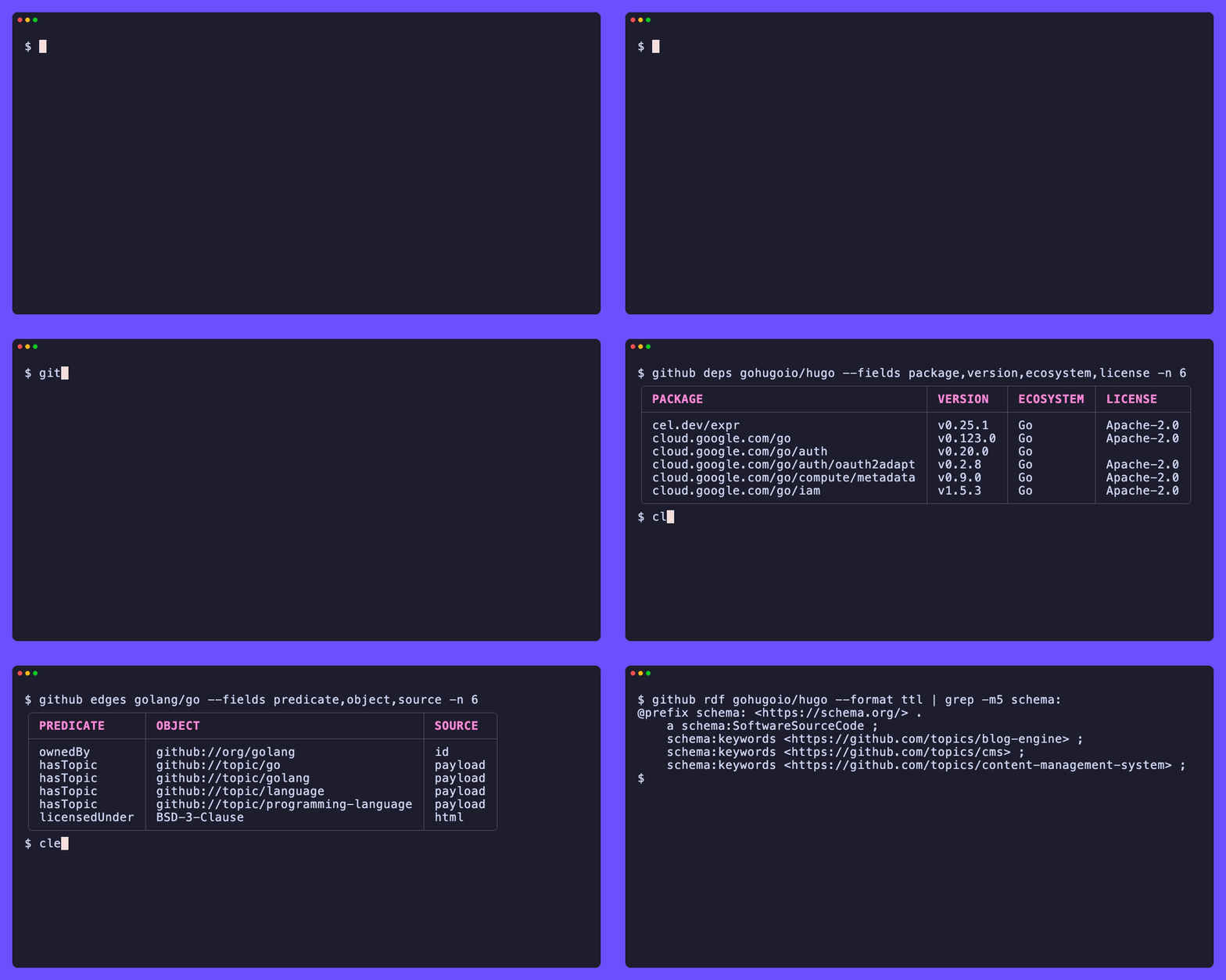
github rdf gohugoio/hugo --format ttl # schema.org triples
Output adapts to where it goes: an aligned table on your terminal, JSONL the moment you pipe it somewhere.
Why no token
The unauthenticated REST API allows sixty requests an hour, which is not enough to read one organization. The pages sit behind a CDN, so they are faster than the API even where the API would work, and they carry more: trending, contribution calendars, dependency graphs, and download counts have no API route at all.
So this tool reads the same JSON the site's own browser code reads, plus the Atom feeds, the search JSON, the raw host, and the git protocol. The cost is that it is read-only and public-only. For anything else, use the official gh.
What makes it different
- Six surfaces, one record. A repository record is assembled from the embedded React payload, the route JSON, a deferred XHR fragment, and the search index, and it records which URL each field came from.
- It is a graph. Repository references, mentions, closing keywords, forks, and dependencies all become typed edges, each one carrying the source that stated it.
- It exports linked data. N-Triples, Turtle, JSON-LD, and N-Quads, keyed on the same
github://addresses. - Nothing is hidden.
github pageprints the whole extraction of any URL, so a field no record models yet is still reachable today.
Two ways to use it
- As a command for reading GitHub by hand or in a script. Start with the quick start.
- As a resource-URI driver so a host like ant can address the site as
github://URIs and follow links across sites. See resource URIs.
Both are the same code: one operation, declared once, is a CLI command, an HTTP route, an MCP tool, and a URI dereference.
Not affiliated with GitHub or Microsoft. It reads the public site the way any reader does.
Where to go next
- New here? Read the introduction, then the quick start.
- Installing? See installation.
- Doing a specific job? The guides are task-first.
- Need every flag? The CLI reference is the full surface.